


What Makes JAC Bakkies Different in SA?
Bakkie prices in South Africa have climbed steadily over the past few years, especially in the double-cab segment. For many buyers, the question is no longer about owning the biggest badge on the road – it is about getting a capable, reliable vehicle that makes financial sense.
That shift in buyer thinking has opened the door for brands like JAC Motors to gain serious traction locally. While traditional names still dominate the market, more South Africans are starting to look beyond brand legacy and focus on what they are actually getting for their money.
So, are JAC bakkies good? And what makes them different in South Africa’s competitive bakkie market?
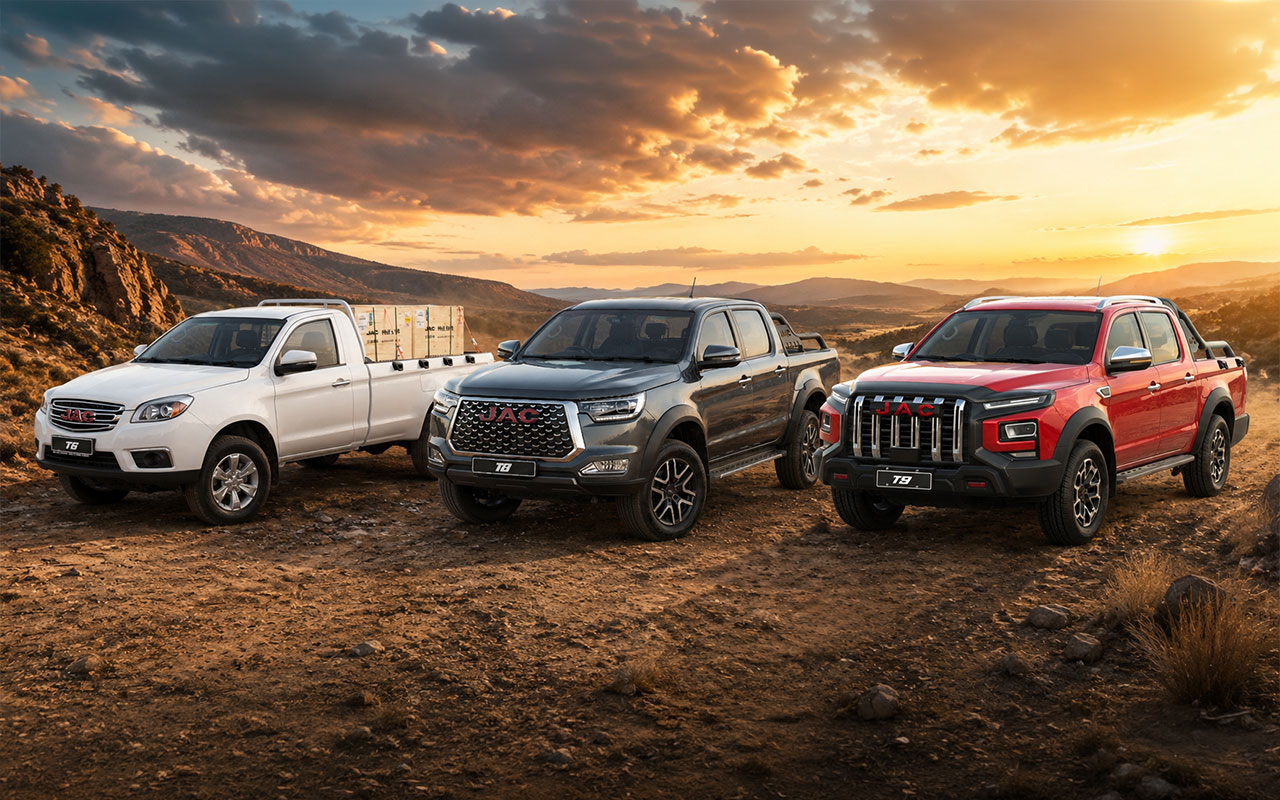
Here is a closer look at why models like the JAC T6, T8 and T9 are attracting attention from business owners, contractors and everyday drivers alike.
Value Without The Hefty Price Tag
One of the biggest reasons buyers consider a JAC bakkie in South Africa is value for money.
Across the local range, JAC has positioned its bakkies to offer practical features and modern technology at price points that are often lower than many established rivals. For example, the new JAC T8 Comfort double cab launched locally at R349,900, making it one of the most affordable double-cab bakkies currently available in South Africa.
Even entry-level models include features many buyers now expect as standard, such as touchscreen infotainment systems, Apple CarPlay and Android Auto connectivity, multifunction steering wheels, and modern safety features. The T9 range further adds a more premium interior feel, advanced safety systems and an eight-speed automatic gearbox.
For buyers comparing bakkie price versus features, that balance is becoming harder to ignore.
If you are exploring the range, you can browse the JAC T6 range, JAC T8 models and JAC T9 line-up online.
Built for Work First
While many modern bakkies have shifted heavily toward lifestyle positioning, JAC still places a strong focus on workhorse capability.
The JAC T6 and T8 ranges are aimed directly at fleet operators, SMEs, transport businesses, contractors and agricultural users. According to JAC Motors South Africa, the T6 single cab was specifically developed to handle demanding transport operations and harsh working environments.
The T8 uses a heavy-duty ladder-frame chassis designed for South African conditions, while the T6 range focuses on durability, low running costs and practical load-carrying capability.
That work-first approach matters in a market where many buyers still rely on their bakkies to tow, carry equipment or spend long hours on the road between sites.
Designed For South African Driving Conditions
South African driving conditions are rarely predictable. A single trip can include urban traffic, long-distance highway travel, gravel roads and uneven rural surfaces.
JAC’s local range has clearly been developed with those realities in mind. Fuel range, ride comfort, and durability all play important roles in day-to-day ownership.
The JAC T8 2.0L CTi has claimed fuel consumption figures as low as 6.1L/100km during testing at Gerotek, while the T9 achieved 6.2L/100km under the same conditions. The T6 single cab has a claimed combined fuel consumption figure of 6.9L/100km and a driving range of more than 1,100km from its 76-litre fuel tank.
For businesses travelling long distances or managing fleet costs, fuel efficiency remains one of the biggest ownership considerations.
Diesel That Still Makes Sense
Diesel continues to make sense for many South African bakkie buyers, especially those towing trailers, transporting loads or covering high mileage every month.
The current JAC diesel engines focus heavily on low-end torque and fuel efficiency. The T8’s 2.0-litre turbo-diesel engine produces 104kW and 320Nm of torque, available between 1,600 and 2,600rpm.
The flagship T9 pushes output even further, producing up to 410Nm of torque, with later models increasing that figure to 444Nm.
That torque delivery is especially useful for towing, carrying heavy loads and maintaining relaxed cruising on long-distance trips.
Practical Ownership, Not Just Perception
One of the biggest conversations around newer automotive brands in South Africa is perception.
For decades, buyers associated reliability almost exclusively with a handful of legacy manufacturers. But rising vehicle prices have caused many consumers to rethink whether paying a significant badge premium still makes sense.
That does not mean buyers should ignore after-sales support, warranty coverage or dealer networks. Those remain important. However, practical ownership costs are becoming increasingly relevant in South Africa’s current economy.
JAC has continued expanding its local footprint, with more than 70 dealers across Southern Africa supporting sales and after-sales service. The brand also offers warranty and roadside assistance coverage across much of its range.
For many buyers, the decision increasingly comes down to balancing affordability, features, operating costs and intended usage– rather than buying purely for brand familiarity.
JAC Is On The Rise In South Africa
Chinese automotive brands have grown significantly in South Africa over the past few years, particularly in the bakkie and SUV segments.
That growth reflects broader changes in the global automotive industry. Buyers are more informed, more value-conscious and more willing to consider alternatives if the product meets their needs.
JAC’s increasing visibility locally has been driven by aggressive pricing, improved product quality and a stronger focus on real-world usability. Models like the T8 and T9 have also helped shift public perception around Chinese bakkies in South Africa, especially among buyers looking for practical alternatives in the affordable bakkie segment.
Balance Between Work And Comfort
One area where modern buyers have changed is expectations around comfort.
A bakkie is no longer only expected to work hard during the week – it also needs to handle school runs, road trips and everyday commuting comfortably.
That dual-purpose role is where the newer JAC models stand out. While the T6 and T8 remain heavily work-focused, they still include modern cabin features and comfort upgrades that make daily driving easier. The T9 pushes even further into premium territory with a more refined interior, larger infotainment system and car-like driving feel.
For many first-time bakkie buyers, that balance between practicality and comfort is becoming increasingly important.
Why JAC Bakkies Are Worth A Closer Look
JAC bakkies may not have the decades-long legacy of some competitors, but that is not necessarily what modern buyers are prioritising anymore.
In South Africa’s current market, affordability, fuel efficiency, practical features and low running costs matter more than ever. JAC has positioned itself as a brand focused on delivering those essentials without inflating pricing purely around badge perception.
For SMEs, contractors, fleet operators and buyers entering the bakkie market for the first time, the JAC T6, T8 and T9 ranges offer a practical alternative that deserves serious consideration.
You can explore available models, pricing and finance options through Group1 JAC South Africa.
Frequently Asked Questions
Are JAC Bakkies Reliable in South Africa?
JAC has steadily expanded its presence in South Africa and continues to grow its dealer and after-sales network. The brand focuses heavily on durability, fuel efficiency and low operating costs, particularly for commercial and fleet users. Like any vehicle purchase, regular servicing and dealership support remain important.
What Engine Does JAC Use in Its Bakkies?
Most current JAC bakkies in South Africa use turbo-diesel engines, including 2-litre common-rail diesel options in the T6, T8 and T9 ranges.
Are JAC Bakkies Fuel Efficient?
Yes. Recent testing reported fuel consumption figures as low as 6.1L/100km for the T8 and 6.2L/100km for the T9 under testing conditions.
How Does JAC Compare to Other Bakkies in SA?
JAC focuses strongly on value-for-money positioning, offering modern features, diesel efficiency and practical capability at competitive pricing levels.
Is JAC a Good Value-For-Money Brand?
For buyers prioritising affordability, specification levels and practical usability, JAC offers strong value in the South African bakkie market.
Leave a Reply